Orthodontics in Istanbul, Turkey: A 2026 Guide for International Patients
Orthodontics is different from almost every other dental specialty international patients research: it isn’t a one-week procedure, it’s a process that runs 6 to 24 months. That single fact changes everything about how the patient journey should be designed — and it’s where a badly planned trip abroad causes the most frustration. This guide covers what orthodontic treatment involves, how the remote-monitoring model actually works in practice, and how 2026 pricing in Istanbul compares with the UK and Germany — without pointing to any single clinic.
What Orthodontics Covers
Orthodontics is the branch of dentistry focused on correcting the position of teeth and the alignment of the jaws — for both function (bite, chewing, speech, jaw joint health) and aesthetics. Common treatment types include:
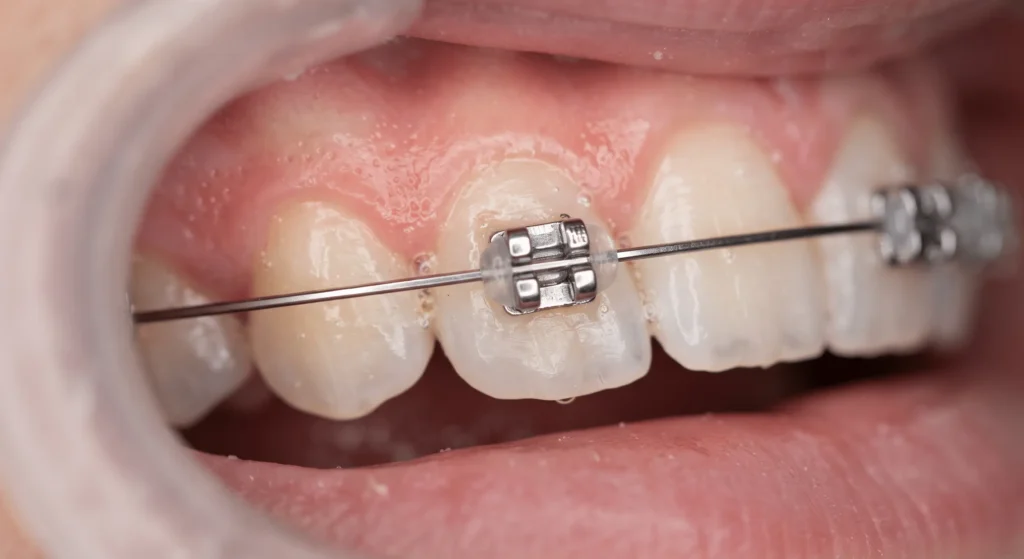
- Traditional metal braces — the most affordable and often fastest option for complex movements
- Ceramic (tooth-colored) braces — less visible than metal, same mechanical principle, similar treatment time
- Lingual braces — brackets fitted behind the teeth, invisible from the front, but technically demanding and requiring more frequent in-person adjustment
- Clear aligners (Invisalign and equivalent systems) — a series of custom, removable trays, changed every 1–2 weeks, best suited to remote/international treatment
- Early (interceptive) orthodontics for children, addressing jaw growth or bite issues before all adult teeth erupt
- Retainers and post-treatment maintenance, essential after any of the above to prevent relapse
- Combined orthodontic–surgical treatment, where orthodontics is paired with orthognathic (jaw) surgery for cases where the skeletal discrepancy is too large for tooth movement alone (see our companion guide on oral and maxillofacial surgery)
The Honest Part: Orthodontics Abroad Isn’t a Short Trip
Unlike a veneer case or a wisdom-tooth extraction, orthodontic treatment cannot be completed in a single visit — the teeth need months of gradual, monitored movement. A realistic, well-run international orthodontic plan generally looks like this:
- Trip 1 (2–4 days): intraoral 3D scan (usually with an iTero-type scanner) or physical impressions, X-rays, clinical exam, and a digital treatment simulation showing the planned tooth movement. For aligner cases, this is also when attachments (small tooth-colored bumps that help the aligners grip) are placed.
- Remote phase (months): for clear aligners, you receive your full set (or successive batches) of trays and change them at home every 1–2 weeks, following the digital plan. Progress is checked via periodic photos or video calls with the orthodontist.
- Trip 2 (optional, mid-treatment, 1–2 days): for more complex aligner cases or if refinement trays are needed, or the point at which fixed-brace patients would otherwise need in-person adjustment.
- Final trip (1–2 days): completion check, any final refinements, and fitting of retainers.
This model works well for clear aligners — you receive your trays and manage the day-to-day process remotely. It’s much harder for traditional or ceramic fixed braces, which typically need in-person adjustment every 6–8 weeks — impractical for most international patients unless you can realistically fly in that often. For this reason, many providers now steer international patients toward clear aligners specifically because the logistics match the travel pattern — worth knowing so you can judge whether that recommendation fits your case or is being made for convenience.
If your case is genuinely complex — severe crowding, significant bite discrepancy, missing teeth, or a likely need for surgery — ask directly whether aligners alone are appropriate, or whether fixed braces (or a combined surgical-orthodontic plan) would give a materially better result. A good orthodontist will tell you when aligners are not the ideal tool, even though they’re more travel-friendly.
Why Istanbul Is a Major Orthodontics Destination
- Platinum/Diamond-tier Invisalign providers. A number of Istanbul clinics treat high volumes of aligner cases, which typically comes with preferential access to the aligner manufacturer’s planning software and clinical support.
- Established remote-monitoring infrastructure. Video check-ins, progress-photo review, and batch-shipping of aligner trays are now standard practice among clinics used to treating patients who live abroad.
- Lower cost base, as with the rest of Turkish dentistry — clinical outcomes for orthodontic tooth movement don’t differ by geography; the same biological process, and often the same aligner brand or bracket system, is used in Istanbul, London, or Berlin.
- Combined-case convenience. For patients who need both orthodontics and other work (implants, veneers, oral surgery), Istanbul’s dental-tourism infrastructure allows these to be coordinated within the same overall treatment plan and travel schedule.
2026 Price Comparison: Turkey vs. Western Europe
Ranges below reflect multiple published 2026 sources. Orthodontic pricing depends heavily on case complexity (mild, moderate, or severe) and treatment length, so use these as orientation figures — a firm price requires a 3D scan and case assessment.
| Treatment | Typical range in Turkey | Typical range in UK | Typical range in Germany | Approx. savings |
|---|---|---|---|---|
| Metal braces (full treatment) | €700–€1,400 | €2,800–€3,750 | €2,300–€3,500 | 55–70% |
| Ceramic braces (full treatment) | €1,000–€1,900 | €3,200–€4,500 | €2,800–€4,200 | 55–65% |
| Lingual (behind-teeth) braces | €1,800–€3,300 | €4,500–€7,000 | €4,000–€6,500 | 50–60% |
| Clear aligners — mild case | €1,000–€1,600 | €2,500–€3,500 | €2,300–€3,200 | 50–65% |
| Clear aligners — moderate case | €1,600–€2,500 | €3,500–€5,000 | €3,200–€4,500 | 45–60% |
| Clear aligners — complex/full case | €2,500–€4,500 | €4,500–€6,500 | €4,000–€6,000 | 40–55% |
| Retainers (post-treatment, both arches) | €80–€200 | €300–€600 | €250–€500 | 55–70% |
Why aligner pricing is usually quoted as a range, not a fixed number: the total cost depends almost entirely on how many aligner trays your case requires — mild crowding might need 10–15 trays, a full comprehensive case can need 40 or more. Ask for the price at your specific case complexity, not a generic “starting from” figure.
How to Choose an Orthodontic Provider for Remote Treatment
Because most of the treatment happens away from the clinic, the questions to ask are different from a short surgical trip:
- Who actually reviews your progress remotely — a qualified orthodontist, or an unqualified coordinator relaying generic instructions? Ask specifically.
- How often are check-ins, and through what channel (video call, app, WhatsApp photos)? Get this in writing before you commit.
- What happens if your teeth aren’t tracking the digital plan? Aligners sometimes need mid-course refinement trays — confirm whether these are included in the original price or billed separately.
- Is the aligner brand named specifically (e.g., a recognized, clinically established system with a long clinical track record) rather than a generic or unbranded “invisible aligner” product?
- What is the retainer policy — is a retainer included at the end of treatment, and is a replacement retainer available (and at what cost) if you lose or damage one after returning home?
- Is there a plan for genuine emergencies — a broken bracket, a lost aligner, a wire poking the cheek — while you’re at home and thousands of kilometers from the treating clinic? A good provider will have a protocol for this (often coordinating a temporary fix with a local dentist).
- For fixed braces specifically: be realistic about whether you can actually make the every-6–8-week visits the treatment requires. If not, ask whether aligners are clinically appropriate for your case instead of defaulting to the travel-friendly option regardless of fit.
Frequently Asked Questions
How many trips to Turkey will orthodontic treatment actually require? For clear aligners, typically two to three trips over the full treatment period: an initial scan/attachment visit, an optional mid-treatment check, and a final visit for retainers. For fixed braces, realistically only patients who can visit every 6–8 weeks, or who plan an extended stay in Turkey, should choose this route internationally.
Is the treatment time longer or shorter than doing it locally? No — tooth movement follows the same biological timeline regardless of country. Total treatment length (typically 6–24 months depending on complexity) is comparable to what you’d expect from an orthodontist at home.
Can my local dentist monitor the treatment between visits to Turkey? Some providers coordinate with a dentist in your home country for basic checks between remote monitoring sessions, particularly for fixed braces. Confirm this explicitly before starting, since not every provider offers it.
What if I need to stop treatment partway through, or move countries? Ask before starting what happens if you need to transfer care to a local orthodontist mid-treatment — whether your case file, digital scans, and treatment plan can be shared, and whether the aligner brand’s clinical software is used by orthodontists elsewhere (most major systems are internationally supported, which makes a mid-treatment handover far more practical).
Is orthodontic treatment ever combined with jaw surgery? Yes — for skeletal (bone-level) discrepancies too large for tooth movement alone, orthodontists work alongside an oral and maxillofacial surgeon in a combined surgical-orthodontic plan, with orthodontics both before and after surgery. This significantly extends the treatment timeline and should be discussed as a distinct pathway, not folded into a standard braces or aligner quote.
This article summarizes publicly available 2026 market data and general best practice for orthodontic treatment involving international travel. It is not a recommendation of any specific clinic, orthodontist, or aligner brand. Any price should be confirmed directly and in writing, based on your own 3D scan and case assessment, before you commit to treatment.