General Dentistry in Istanbul, Turkey: A 2026 Guide for International Patients
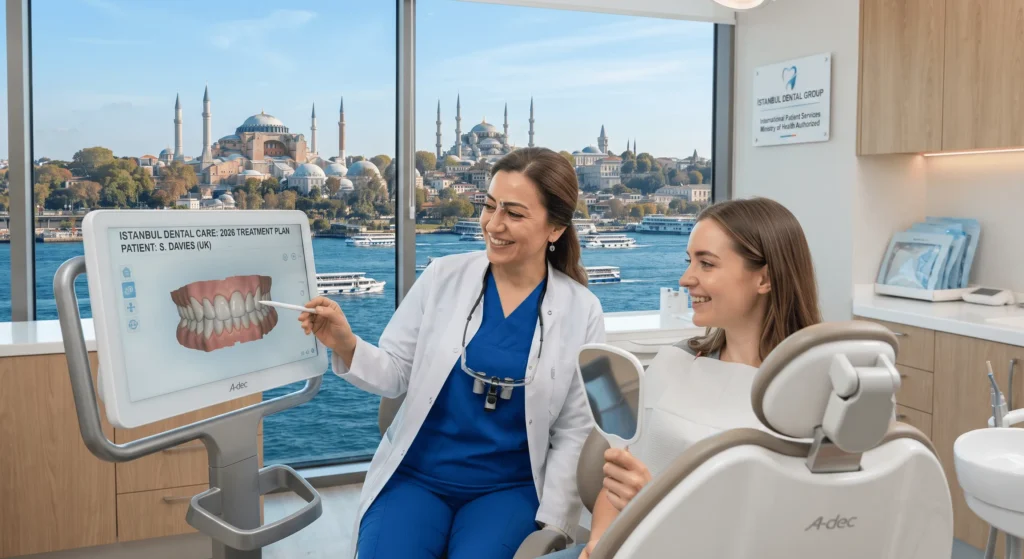
Every year, hundreds of thousands of patients from the United Kingdom, Germany, the Netherlands, Scandinavia, and the wider EU fly to Istanbul for dental care that would cost two to four times as much at home. Most of the attention goes to headline procedures like veneers and implants — but the foundation of any successful dental trip is general dentistry: the routine diagnosis, prevention, and restorative work that keeps a mouth healthy in the first place, and that determines whether more advanced treatment is even needed.
This guide looks at what general dentistry actually covers, what the patient journey looks like in practice, how much it costs compared with Western Europe, and what to check before booking — without recommending any single clinic.
What “General Dentistry” Actually Covers
General dentistry is the entry point for almost every dental visit. It typically includes:
- Diagnostic exams and digital X-rays / panoramic imaging to assess overall oral health
- Professional cleaning and scaling (removal of plaque and tartar)
- Fillings, using tooth-colored composite rather than older metal amalgam
- Root canal treatment for infected or badly decayed teeth
- Simple extractions and wisdom tooth removal
- Gum (periodontal) treatment for early to moderate gum disease
- Fluoride and preventive treatments, including sealants
- Basic crowns and bridges where a tooth needs structural reinforcement
- Oral cancer screening as part of a routine check-up
For international patients, general dentistry is usually the first appointment on arrival: a full exam, X-rays, and a written treatment plan, so that any cosmetic or surgical work (veneers, implants, orthodontics) is only proposed once the underlying dental health is understood.
Why Istanbul Has Become a General Dentistry Hub
A few structural factors explain the price gap, independent of any individual provider:
- Lower operating costs. Rent, staff wages, and clinical overheads are substantially lower in Turkey than in the UK, Germany, or Scandinavia, even though many clinics import the same implant systems, ceramics, and equipment used in Western Europe.
- Currency effects. The favorable exchange rate for GBP, EUR, and USD against the Turkish lira means Western income converts into significant local purchasing power.
- Volume and specialization. Many Istanbul clinics see a high volume of international patients, which supports in-house labs, faster turnaround, and dedicated multilingual patient coordinators — lowering per-patient overhead.
- Government-backed health tourism framework. Turkey has an official “Health Tourism Authorization Certificate” system administered through the Ministry of Health, plus JCI (Joint Commission International) accreditation for a growing number of hospitals and clinics, giving international patients a formal quality benchmark to check for.
None of this means quality is automatically lower or higher than in Europe — it means the cost structure is different. The clinical outcome still depends on the individual dentist’s training, the brand of materials used, and the clinic’s aftercare process.
2026 Price Comparison: Turkey vs. Western Europe
Prices below are broad market ranges gathered from multiple published sources and dental-tourism cost surveys current as of 2026. Actual quotes vary by city, clinic tier, and case complexity — always request a written, itemized quote based on your own X-rays before travelling.
| Treatment | Typical range in Turkey | Typical range in UK/Germany | Approx. savings |
|---|---|---|---|
| Dental check-up + X-ray | Often free–€30 with treatment plan | £60–£150 | 60–100% |
| Composite filling | €30–€70 | £100–£250 | 65–75% |
| Root canal treatment | €80–€180 | £400–£900 | 65–80% |
| Simple extraction | €25–€60 | £80–£200 | 60–75% |
| Porcelain/zirconia crown | €150–€300 | £500–£900 | 55–70% |
| Single dental implant (implant + crown) | €400–€900 | £2,000–£4,500 | 60–80% |
| All-on-4 / All-on-6 (per jaw) | €3,200–€6,500 | £8,000–£20,000 | 60–75% |
| Porcelain/E-max veneer (per tooth) | €180–€450 | £700–£1,200 | 60–70% |
Why the range is so wide, even within Turkey: budget clinics using generic materials sit at the bottom of the range, while premium clinics using branded systems (e.g. internationally recognized implant and ceramic brands) sit at the top — still well below equivalent Western European pricing for the same brand and warranty terms. A quote significantly below the low end of these ranges is a signal to ask harder questions about materials, lab work, and aftercare, not a reason for automatic excitement.
What a Good Patient Journey Looks Like
A well-run international patient process typically follows this sequence:
- Remote consultation. Photos or a recent panoramic X-ray reviewed by a dentist, with an initial (non-binding) treatment plan and price estimate sent before travel.
- Airport-to-clinic logistics. Many clinics arrange or coordinate airport transfer and hotel booking as part of the package — confirm in writing what is included versus billed separately.
- In-person exam and diagnostics on day one. A full clinical exam, updated imaging, and a finalized treatment plan and price, agreed and signed before any irreversible work begins.
- Treatment days. Straightforward general dentistry (fillings, cleaning, extractions, root canals) is usually completed within one to three visits over a few days. More complex reconstructive work is staged over a longer stay or split across two trips (e.g., implant placement, then a return visit months later for the final crown once the bone has healed).
- Written aftercare plan and warranty documentation. This should specify what is covered, for how long, and how follow-up or complication care is handled once you are back home — including whether the clinic works with a partner dentist in your home country.
- Follow-up communication. Reputable clinics stay reachable by messaging app or email for questions after you’ve returned home, and will coordinate with your local dentist if a review or repair is needed.
How to Vet a Clinic Before You Book
- Verify accreditation. Look for a valid Turkish Ministry of Health “Health Tourism Authorization Certificate,” and check whether the facility or its dentists hold JCI or ISO certification.
- Ask about materials by brand name, not just “premium” or “high-quality.” Reputable clinics will tell you exactly which implant system, ceramic brand, and lab they use.
- Check the dentist’s individual credentials, not just the clinic’s marketing — university training, specialization (endodontics, periodontics, prosthodontics), and years of experience with the specific procedure you need.
- Get the treatment plan and total price in writing before travelling, including what happens if the plan changes once treatment begins.
- Ask what the warranty actually covers — implant failure, crown/veneer debonding, and for how long — and whether it requires an in-person return visit or can be handled with a local partner dentist.
- Read recent, verifiable patient reviews across multiple independent platforms, not only testimonials on the clinic’s own website.
- Confirm English-language (or your language) support throughout — not just for the sales conversation, but during clinical appointments themselves, ideally with a dedicated patient coordinator or a dentist who is directly fluent.
Frequently Asked Questions
Is general dentistry in Turkey safe? At accredited, JCI- or Ministry of Health-certified facilities using internationally recognized materials, clinical safety standards are comparable to Western Europe. As with any medical travel, due diligence on the specific clinic and dentist matters more than the country label alone.
How long do I need to stay for general dentistry? Routine work — a check-up, cleaning, fillings, a root canal, or a few extractions — is usually completed in one to three days. More complex restorative or surgical work may require a longer stay or a second visit.
Will my home dentist be able to check the work afterward? Yes. Ask the clinic for full clinical documentation (X-rays, materials used, treatment notes) to hand to your regular dentist for routine follow-up checks.
Does travel insurance cover dental tourism complications? Standard travel insurance rarely covers elective dental treatment complications. Some clinics offer their own complication-cover packages; ask about this explicitly before booking, and consider dedicated medical-travel insurance if the treatment plan is extensive.
Are there hidden costs to watch for? Common extras include imaging not included in the initial quote, sedation, temporary prosthetics, and a second trip for staged implant work. A trustworthy clinic itemizes all of this in the written plan before treatment starts.
This article summarizes publicly available 2026 market data and general best practice for dental medical travel. It is not a recommendation of any specific clinic, and prices should always be confirmed directly and in writing based on your own diagnostic imaging before you travel.